Search
From rural hero to global market leader: 150 years of RUD
RUD’s division managers Klaus Pfaffeneder, Hermann Kolb, Francesco Di Giusto and Christian Motzke tell us all about the success story of the island of peace.
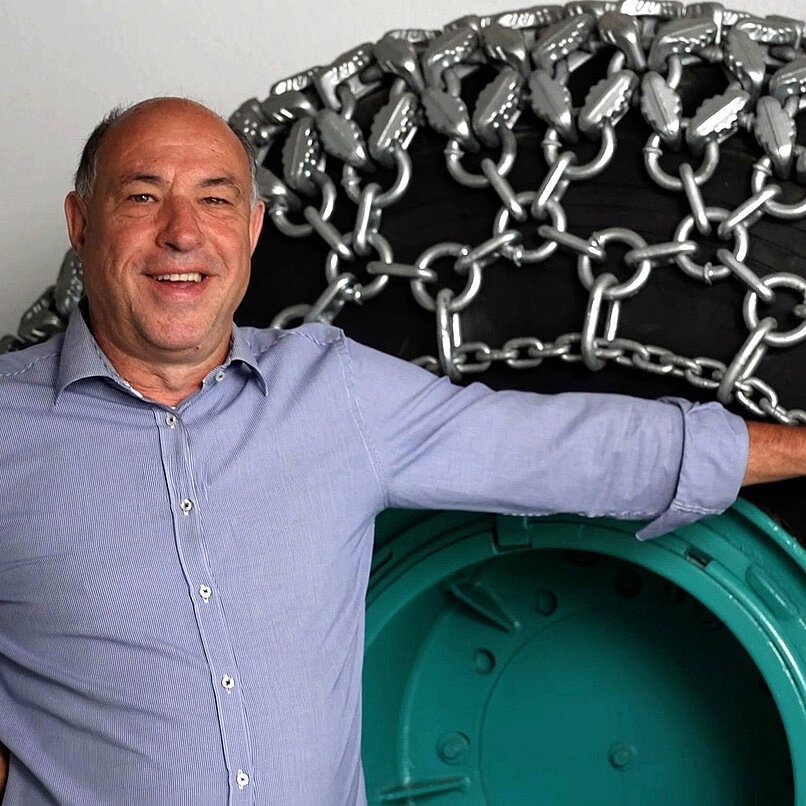
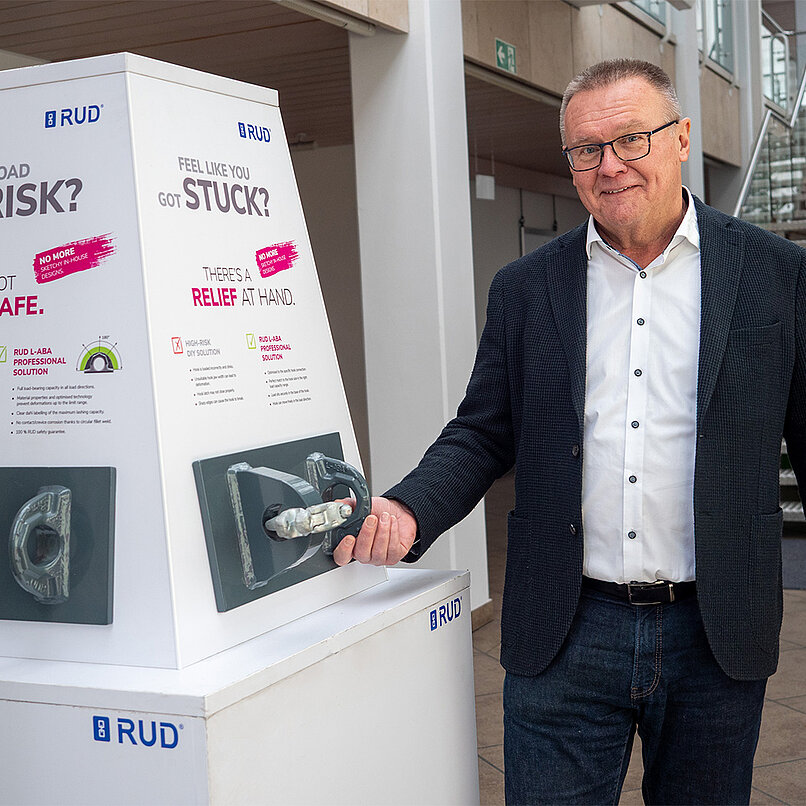
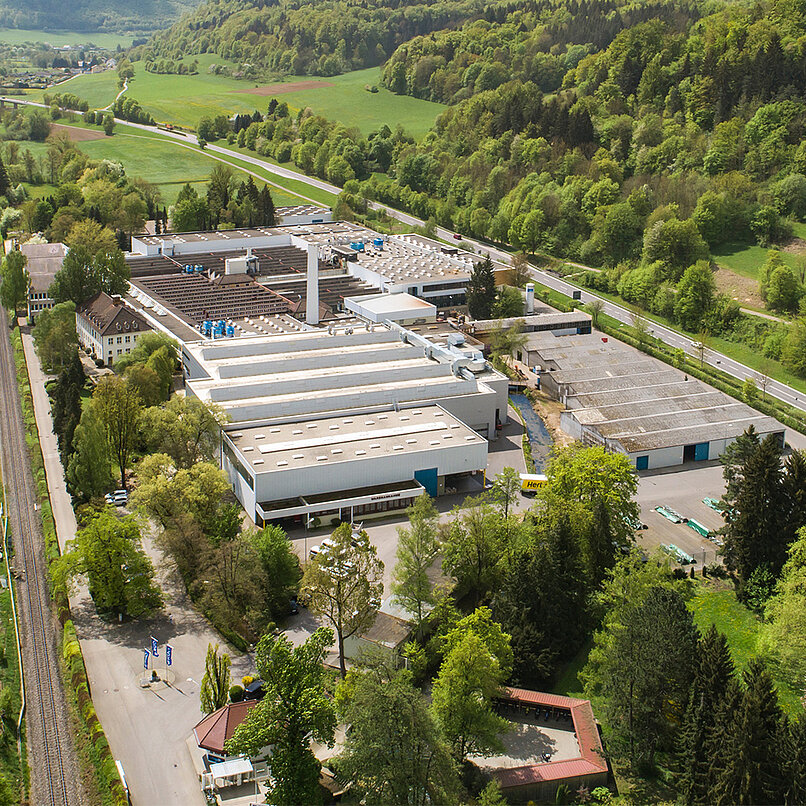
When RUD was founded, Otto von Bismarck was still Chancellor. The company on Aalen’s island of peace has survived two world wars and numerous economic and financial crises, consistently maintaining its position as a technological pioneer. RUD is still in the hands of the founding family and is now the world’s leading specialist in chain systems, but also very successful in other business areas. The four RUD division managers Klaus Pfaffeneder (conveying and driving), Hermann Kolb (lifting and lashing equipment), Francesco Di Giusto (tyre chains) and Christian Motzke (furnishings) talk in an interview about the history, present and future of the company.
- 150 years of RUD – an eternity in the world of business. The company was founded in 1875 on a greenfield site and now operates worldwide. According to Wirtschaftswoche (Business Week), it is the world market leader in chains and chain systems. At the same time, however, RUD has always retained the character of a down-to-earth, family-run business with strong roots in its home region. Would you agree that a model success story has been written here on Aalen’s island of peace by a German SME?
Motzke: Definitely so.
Kolb: The family that founded the business is known for its understated elegance and its reluctance to use superlatives. However, I believe that almost everyone in the company would agree that we are looking at a prime example of the success of German small and medium-sized enterprises.
Di Giusto: That’s exactly my opinion too.
Pfaffeneder: I would fully agree with that as well. RUD has always been family-owned, which is precisely why a very long-term perspective has always been taken, and continues to be taken. This applies to the products and the processes – but also how we deal with globalisation. In my view, the ownership structure of many large corporations, especially publicly traded companies, is causing them to act very short-sightedly today. They often prioritise shareholder value over their own employees. Things are completely different at RUD.
- RUD is not only a prime example of the success of a medium-sized company, but also a typical “hidden champion” – a global leader in its market segment that is still little known to the general public. Could you briefly outline to our readers the areas in which the company operates today?
Pfaffeneder: In the conveying and drive chains division area we deal with chain and conveying systems for the transport of bulk and general cargo. Our conveying systems are often used in coal-fired power stations and waste incineration plants for the thermal recovery of waste products, as well as for transporting bulk materials such as cement, fertilisers, and a wide variety of chemical products. In turn, our drive technology can be found in many areas, including heavy industry, tunnel construction, shipping, port facilities, and steel hydraulic engineering.
Kolb: RUD’s lifting means are used whenever heavy components or machinery need to be lifted and moved safely. Typical areas of application include the construction industry and industrial production, particularly in mechanical and plant engineering. However, there is also an increasing demand for underwater applications, such as the construction of pipelines or offshore wind farms. The field of lashing equipment involves securing loads during heavy transport by road, rail, air, or sea. Our lashing chains and lashing points are used to secure refinery boilers, construction machinery, military equipment, and spacecraft during transport.
Di Giusto: In the field of tyre chains, we supply classic snow chains for cars, vans, trucks, buses, and work machines such as tractors and snowploughs, as well as tyre protection chains for the large vehicles often found in mines, quarries, and steelworks. Tyre protection chains are also important for forestry vehicles..
Motzke: RUD’s furnishings are somewhat different from the other business areas. Under the brand name “Erlau” we develop and manufacture durable, design-led, and functional open space furniture for a variety of settings, including public spaces, parks, schools, kindergartens, car parks, rest areas, and railway stations. On the other hand, we develop solutions that revolve around the topic of “bathrooms for specific needs”: grab bars and support handles, shower seats and shower handrails, as well as shower enclosures and aesthetically practical accessories.
- The furnishings business division is certainly unusual. While RUD’s main focus is on chain systems for use in construction, industry, and the transport sector, this product and application area is completely different. How did that happen?
Motzke: To start with, it was literally a second mainstay. The company was looking for a business area that would be independent of developments in various chain system markets and that could be easily developed based on our existing expertise. Furnishings for open spaces were developed first. The wet-room sector was added later. Although it is historically the youngest business area, it has been in operation for over 30 years.
- RUD’s oldest business area is the agricultural sector. Following its establishment in 1875, the initial products were primarily intended for use in agriculture. At that time, this sector was still dominant in the German economy, accounting for around 35 percent of the total gross value added and employing approximately 49 percent of the workforce. Now it’s not even one percent. Does RUD’s “original” agricultural business still play a role?
Pfaffeneder: Although agriculture is no longer our main area of business, our products and solutions are still used in the sector. Additionally, many RUD products originally intended for agricultural use were later adapted for use in other industries. We still benefit from the technological expertise derived from manure spreaders and loading wagons today, for example in industrial scraper conveyors for power stations and the bulk materials industry.
- What would you say to those who describe RUD simply and concisely as a “chain manufacturer”? Those familiar with the company will often associate it with the concept of “chains” – after all, the word is an official part of the company name.
Kolb: Even though the round steel chain may still be of great importance to us, reducing ourselves to the status of a chain manufacturer would not do RUD justice. The systems approach is important for all our business areas. As solution providers, we deliver complete system solutions for practical applications, which always include chains, hooks, attachment points, drive wheels, guides, and assembly and locking systems, to name just a few. Furthermore, thanks to our extensive experience in consulting and development, we are able to implement customised solutions and are pioneers in the field of digitalisation. Since 2014, we have supplied millions of lifting and lashing means fitted with RFID transponders worldwide. Anyone reading this information on a smartphone has immediate access to detailed product information and guidance on its safe use. We were the first manufacturers to implement that.
Pfaffeneder: Furthermore, we don’t just sell our products and systems blindly; we consistently focus on their application. We always try to understand how our customers use our products and help them improve. One example is the R160 conveyor chain, which we developed for use in harsh and abrasive environments. Even though we had already set the industry standard, we continued to work on optimising this chain for specific applications, achieving a doubling of its service life. Such projects just go to show that we are much more than simply a chain manufacturer.
Motzke: The fact that we have been active in the furnishings field for around 70 years now clearly demonstrates that interpreting RUD solely in terms of the “product chain” is far too simplistic. The company can do so much more, otherwise it would not have prevailed on the market for so long.
- That’s a good point. In order to maintain a position over a period of 150 years, you must possess a certain “success gene”. What do you think is RUD’s crucial strength? Just five years after its foundation, the company received its first official “royal award” in recognition of its work. Today, RUD’s slogan is “Tradition in Dynamic Innovation”. Is it really possible to speak of a tradition in terms of innovation? Is it this tradition that makes RUD different?
Di Giusto: Definitely, yes. RUD’s success was primarily due to our technicians and development engineers constantly coming up with new solutions. At RUD, innovation is a way of life. It has always been, and continues to be, the driving force behind our company’s development. This can even be illustrated with some examples: For instance, RUD was the first company in the world to introduce electric chain welding, which it did in 1906. The track cross chain, the forerunner of all modern snow chains, was invented by the company in 1935. The world’s first tyre protection chain was then added in 1943.
Kolb: In 1953, RUD became the first chain manufacturer to receive the H1 test mark for high-strength chains. It was also the first steel chain manufacturer to receive approval in quality classes 5, 8, 10 and 12. Not to mention its pioneering role in digitalisation – RUD has achieved all this and much more.
Di Giusto: These days, we file new patents at RUD every year, so our innovation cycles have actually become more intensive. Innovation has a long tradition here, and that is not just a slogan; it’s a fact.
- When you think about the multitude of innovations, you cannot help but think of the Swabian tinkerer and inventor myth when considering the headquarters in Aalen-Unterkochen in the Swabian Alb. Can you identify with that?
Pfaffeneder: A little bit, yes. The employees of RUD certainly possess the proverbial “Swabian inventor DNA”. They excel at developing new things and constantly improving them.
Di Giusto: That’s absolutely true. But not everyone is quite so happy with the term “tinkerer”. One of our employees once told me that, in his opinion, this expression is no longer appropriate today, simply because technology has advanced so much.
Pfaffeneder: My colleague does have a good point there. In fact, RUD has been developing high-tech solutions strategically since its foundation, so this actually has little to do with traditional “tinkering”.
- On the subject of highlights and high-tech: it’s difficult to pick just a few highlights from 150 years of company history. But we can try. In your opinion, what were RUD’s greatest successes, and which of their many innovations would you particularly highlight? – Maybe we should start with the business field of lifting and lashing equipment.
Kolb: The innovation that had the greatest impact was undoubtedly our invention of the modern lashing point in the early 1980s. These products, which enable lifting or lashing chains to be securely attached to loads, were not available before. Instead, comparatively simple standard parts, or even worse, basic home-made solutions were used. A considerable risk of accident resulted from both. By contrast, our lifting and lashing points were a significant advancement in safety technology. In addition, the continuous development of the quality classes of our lifting and lashing chains has resulted in enormous safety improvements. To put that into perspective, here are some figures: Today’s RUD grade 12 chains are 50 to 80 per cent stronger than comparable chains were at the beginning of the 1990s.
- What were the highlights in conveying and drive chains?
Pfaffeneder: The case-hardened conveyor chains developed by our conveying and drive chains business division have become the global standard, despite there being no technical standardisation. Even now, all competitors refer to the technical specifications of this RUD invention. The same goes for the RUD lifting chains, which gave rise to RUD drive technology. It is now indispensable in many maritime sectors, as well as in tunnel construction.
- And what about the area of tyre chains?
Di Giusto: One of the highlights of recent years is certainly our RUDcomfort Click2Go solution, which allows snow chains to be mounted in a revolutionary way: The central body of the chain is clicked onto the rim via an adapter; then, the chain is simply placed on the outside and pulls itself onto the tyre while the vehicle is in motion. There has never been anything like it. One of our greatest successes regarding tyre protection chains is certainly the fact that we can provide suitable tyre protection chains even for the world’s largest wheel loaders, which have tyres around four metres high. We are still the only manufacturer that can serve such tyre sizes in the segment of extremely strong protective chains with a link thickness of 26 millimetres.
- You have made a name for yourself, even when it comes to furnishings that are usually considered marginal.
Motzke: In fact, we enjoyed major success here: In the lead-up to the 1972 Summer Olympics in Munich, we successfully participated in the design competition for open space furnishings, subsequently equipping the Olympic Park with our “Olympia” seating system as the sole supplier. This seating system was a trendsetter and is still considered the gold standard for design-led urban furniture.
- How does RUD ensure that all its products and innovations consistently meet the highest standards across such a wide range of activities and applications? And how does it convince potential users of this? It’s one thing to develop an innovation; but it’s another to raise it to a proven standard of success and maintain it.
Kolb: Part of RUD’s DNA is that we have very high standards for ourselves and always carry out very meticulous and comprehensive tests and quality controls. Of course, our competitors also make this claim. Therefore, certifications from reputable, independent institutes have always been very important to RUD. For example, we place great importance on product certifications from the German Social Accident Insurance (DGUV), as well as certifications from industry-specific institutions such as DNV (Det Norske Veritas), which is particularly important in the offshore industry. These independent certifications prove that our products and solutions deliver on their promises.
- Let’s take a look into the future. We are currently experiencing economically difficult times. Do you think that RUD is well positioned to overcome the upcoming challenges and continue the success story of the island of peace?
Pfaffeneder: RUD has been doing its research and has built up a strong customer and partner network in recent years. The range of products and solutions remains at the highest level and is consistently being expanded. Therefore, I believe that we are well prepared for the future.
Di Giusto: I also believe that the company will continue to grow successfully. I’m very optimistic because we have many talented and dedicated young people on board who will ensure the company’s future success.
Motzke: We operate in a variety of sectors that will remain important in the future and we have established ourselves as market leaders in these sectors. That’s the best basis to remain successful in the long-term.
- Finally, here’s a somewhat tongue-in-cheek question: The oldest Swabian family business is now 300 years old. Will RUD manage that too?
Pfaffeneder: As our Arabian business partners would say: “Inschallah! God willing!“
Mr Pfaffeneder, Mr Kolb, Mr Di Giusto, Mr Motzke – thank you very much for the interview!